Precise, evidence-based trigger point release that quiets tight, painful muscle and restores freedom of movement without drugs or manipulation.

Dry needling is a precise, minimally invasive technique where a thin needle targets the tight knots and tender points deep inside a muscle that are driving your pain. Unlike acupuncture, which works on traditional meridian systems, dry needling is grounded in modern anatomy and physiology. The needle triggers the muscle's natural release response, flushing out the chemical irritants that keep it locked up. Patients often report a twitch, a brief ache, or a sensation of relief as the muscle lets go. It is fast work. A session lasts a few minutes, and many people feel better by the next day. Dry needling pairs perfectly with physical therapy because it quiets the muscle so your therapist can build strength and movement patterns that actually stick. Because the needle works directly on the tissue that is causing the problem, results often show up faster than passive stretching or icing ever could. Most people need only a handful of sessions before the muscle stops flaring the way it used to.
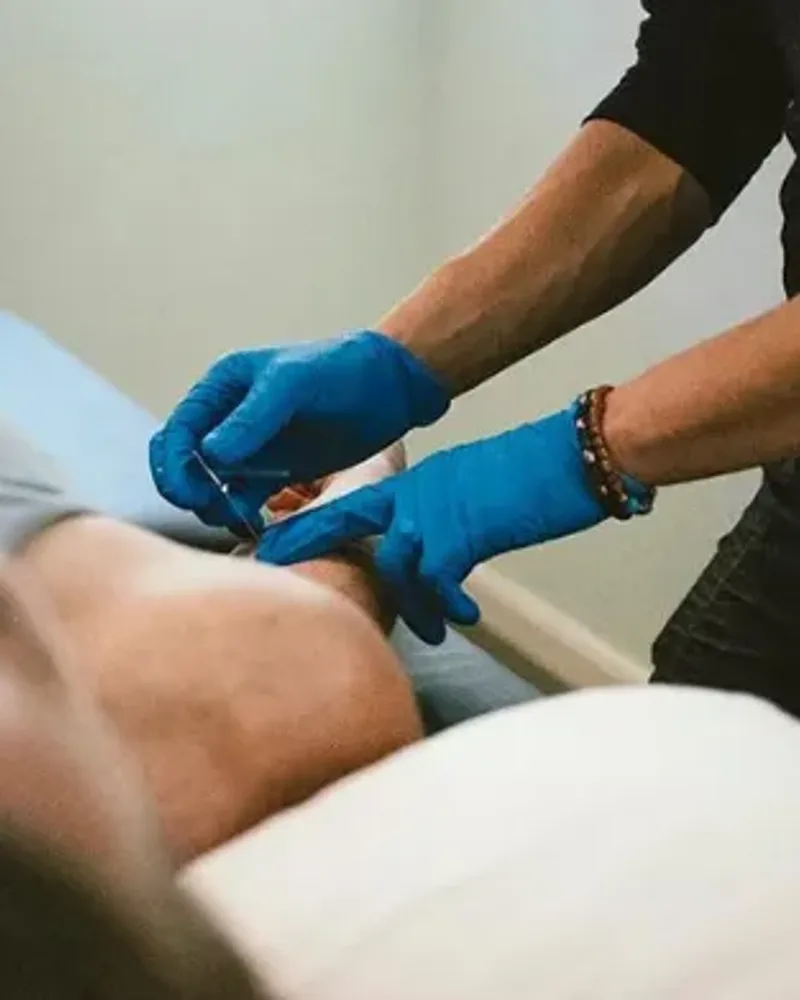
The goal is never pain for pain's sake. The therapist carefully inserts the needle into the trigger point, and the muscle's reflex does the actual release. This is why timing and placement matter so much. A well-placed needle can break a pain cycle that months of stretching and massage could not. Skilled placement is what separates a session that brings lasting relief from one that barely touches the surface, which is why dry needling should always be performed by a therapist trained specifically in the technique.
Dry needling works best for muscle pain that has not budged with rest, stretching, or massage. If you have tight knots that limit your movement or fuel your pain, this technique may be exactly what you need.
You have tight spots that pinch your movement and send pain down your arm or leg. A few sessions of dry needling can release what stretching and therapy alone have not touched, clearing the way for real movement gains. Once the knot lets go, the exercises you have been doing all along finally start to take hold.
Your pain quiets down, then comes roaring back. Deep muscle tension is often the culprit. Dry needling targets those stubborn knots so the relief lasts and the underlying cause does not circle back. It is often the missing step for people who feel like they have tried everything else.
You know exactly where it hurts. Maybe it is your neck, your shoulder, or the side of your hip. Dry needling goes directly to the tight point and resets it so you can move freely again without constant tension. For tension that has settled into one specific area for months, this direct approach often works faster than broader techniques.
Dry needling sessions are brief, focused, and often give immediate relief. Here is how it works from start to finish.
Your therapist palpates the muscle to find the trigger point, then positions you so the area is easy to reach and you are comfortable. You will know exactly what to expect before the needle goes in. Your therapist will walk you through the sensation ahead of time so nothing feels like a surprise.
A thin needle enters the trigger point. You may feel a twitch, a mild ache, or a sudden release. The needle stays in for seconds to a few minutes while the muscle resets. This is the therapeutic part. That twitch response is actually a good sign, it means the needle has found exactly what it was looking for.
The needle comes out, and you stand and move right away. Many people notice immediate relief. Some soreness is normal for a day or two, but most people feel better within hours. Light stretching and staying hydrated afterward can help the muscle settle even faster.
Tell your therapist if you are pregnant, take blood thinners, or have needle anxiety before your appointment. These factors do not rule out dry needling, but your therapist needs to know so they can adapt their approach. A brief conversation before your first session is usually all it takes to feel at ease.
I've gone to Body Moksha for dry needling for awhile now - Leah is a miracle worker! I had bad plantar fasciitis and could barely walk but she has helped me so much with recovery. I've gotten dry needling done at other places but she is by far the best.

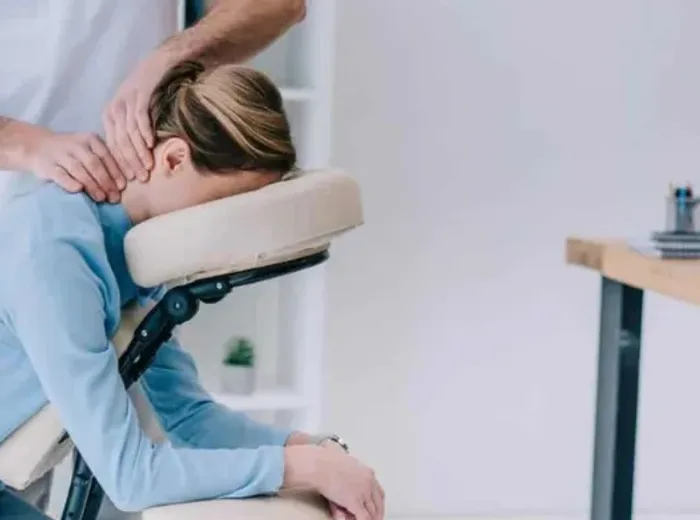
Hands-on techniques to release tension and restore movement where you need it most.

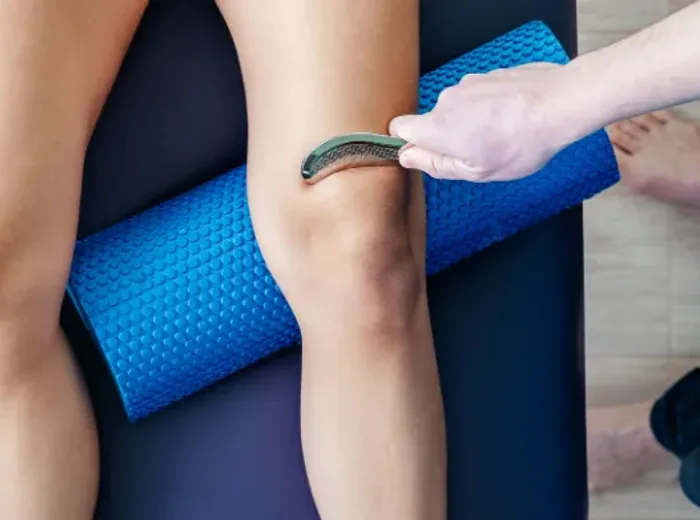
Instrument-assisted soft tissue work to break up restriction and restore full range of motion.

One of the most common reasons patients seek out dry needling. We treat the source, not just the symptom.