

Interview with Dr. Aditi Menon
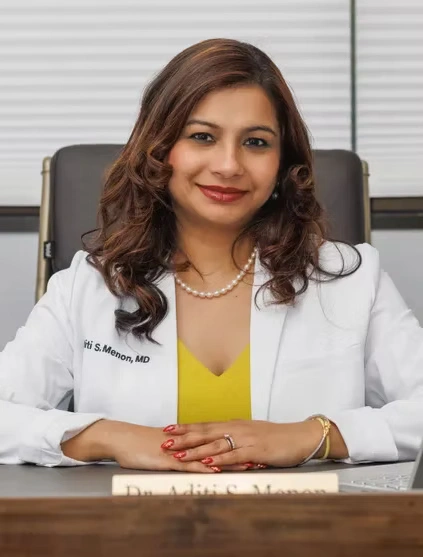
Guest Name: Dr. Aditi Menon
Guest Credentials: Pain Management Physician Specializing in Sports Medicine, Regenerative Medicine and Holistic Health
Discussion Details: Interview with Dr. Aditi Menon, Pain Management Physician and owner of Menon Regenerative Institute in Millburn, NJ. Dr. Menon specializes in sports medicine, regenerative medicine and holistic wellness. Find out how you can avoid surgery and get back to being active by through alternative regenerative treatments like Trigger Point Injections, Hydrodissection, PRP, Stem Cell, Prolotherapy and more. You can follow her Dr. Menon on youtube @MenonRegenerativeInstitute as well as on IG @menonregen. Learn more at meononregen.com.
Benefits of Watching: Find out how you can avoid surgery and get back to being active by through alternative regenerative treatments like Trigger Point Injections, Hydrodissection, PRP, Stem Cell, Prolotherapy and more.
Address of Guests’ Business: Summit Health
45 Essex St STE 202,
Millburn, NJ 07041
Dr. Aditi Menon: Thank you. It’s wonderful to be here.
Dr. Tejal Ramaiya: Um we’ll be talking about your approach to pain management, a bit about your practice, regenerative medicine in general. Um and uh you know if there’s anything you want to add that I don’t ask then make sure that you definitely add that that so that we can help the people who are listening to this. Um so firstly just give us a little bit of a background and share your journey how you got into pain management and what made you specialize in that area of medicine and regenerative medicine specifically.
Dr. Aditi Menon: Absolutely. So um I actually did all my medical school training in New York. Um I’m uh did my medical school at uh SUNY Brooklyn Downstate. Um so which is a wonderful place just to get a lot of exposure to pretty much everything. So very hands-on. Um and then I did my um residency training at uh New York Presbyterian at Columbia and Cornell and we did a lot of training at Hospital for Special Surgery, Memorial Sloan Kettering in addition to Columbia Presbyterian while Cornell. The good thing about that we get exposed to a lot of not only functional medicine and of course the neurological aspects such as um you know strokes and spinal cord injury. We do get a lot of exposure to musculoskeletal medicine um orthopedics and I was fortunate enough at that time regenerative medicine such as platelet rich plasma and stem cells were coming up. So um seeing a lot of research specifically at Weill Cornell and Hospital for Special Surgery really piqued my interest even during that time. So that’s a lot of research was being done in the muscular skeleton and orthopedic realm of regenerative medicine. Um so that’s when um especially HSS was doing a lot of those things. So you know learning about it there and really the whole goal was you know kind of taking what they do and the way they do it and really doing that now in my practice currently. So even my um a lot of the things that I use be it platelet rich plasma kits or the BMAC which is the bone marrow or adipose tissue it’s the same exact ones that Hospital for Special Surgery uses. Um so which is good because you know that clinical trials have been done on them. They’ve been tried and tested. So and these are people who are very heavily researchbased. So I I like the fact that it’s not just coming out of nowhere. It’s you know research based clinical data has shown that this has worked. So, we’re really doing the same exact, you know, um, you know, equipment that’s used there in my practice currently. So, that’s how I kind of got into it. And then I realized there’s just so many patients that I see that have that um you know be it an older patient who has orth you know or osteoarthritis and pain from that or an athlete um who’s professional and they’re training and they get overuse injury or tears or even your regular um the weekend warrior where they’re constantly working every day. So the posture, their commute, everything. So how can we improve the function, decrease the pain without a surgical approach?
Dr. Tejal Ramaiya: And would you say that most patients come to you with the goal of avoiding surgery?
Dr. Aditi Menon: Yeah, definitely. I think the main thing do I Yes, I do have that occasional someone’s like, “Okay, you know what? I do I know I need surgery. I’m trying to avoid it. I want to do this, you know, before, you know, I do surgery. I want to try this one last time. But majority of the patients is like, I really don’t want to do surgery, right? What can we do to avoid that, you know, and really um not just mask it?
Dr. Tejal Ramaiya: Mhm. So I know when I came to your practice to visit you, I felt like you were very unique in how you approached um regenerative medicine and just you know like I think part of it is that you use the same equipment that’s at HSS and maybe even similar protocols. Um so tell us a little bit about what makes your practice unique.
Dr. Aditi Menon: So one thing is really figuring out that diagnostic portion. So when somebody first comes to me of course you know um the main thing is to figure out where is this all stemming from because as you know you know a lot of times the symptoms can be textbook cases but many times it’s a mixed you know where um for example a lot of times the neck and the shoulder pain you know mimic each other same thing as like back and hip. So to really try to get the proper diagnosis, so I do a full evaluation, not only listen to their history and their goals of what they want to do, um because that’s very important, but really um a full exam if I need to send them out for any diagnostics such as MRIs or X-rays. I also do in the office um something called EMG or nerve conduction studies. Um so if there is any numbness, tingling or any type of um you know musculoskeletal issue that might involve nerve a lot of times you know diagnostics with that also helps. I do a lot of ultrasound um guidance in my office but at the same time if I feel like you know what let me take a look at this area with ultrasound while I’m evaluating you. So I try to put that into the mix as well. So it’s not just an evaluation if ultrasound um is needed to just further improve that evaluation. So really number one is making sure we’re me and um you know the patient is on the same page of what’s happening and then coming up with a treatment plan together. I never like to look at someone as this is a knee, this is a back, this is a neck. No, it’s like the whole body. So, I really want to make sure we’re looking at the person as a whole and um because it’s all connected un uh like it or not that one thing affects the other. So, really not just treating one body part but just really treating the whole body um physically but you know of course every component of it. Um and then you know really discussing what are the different treatment plans that we can do to help you know not number one to get to where this is coming from and how to improve that. So I think that is that approach.
Dr. Tejal Ramaiya: If we refer a patient to you or any patient made an appointment with you, um what are the initial steps? Like they call the office and they say, “I’m having pain.” Um but they’re not necessarily making an appointment for a specific type of treatment because you’re going to recommend that after the consultation. So can you just walk us through what the steps would be so that you know patient that potentially might be considering this has a better understanding of like what the process looks like?
Dr. Aditi Menon: Sure. So, first they’ll call the office and they’ll say, “Hey, I’m experiencing.” Most people, you know, really don’t know what treatment they’re looking for. A lot of it is really um I have this pain. What can I do about it? Um I need this taken care of. So, really what you know, what is their pain? And then we will um verify their insurance. Um so, if there’s if you have insurance, we verify it and we’ll let you know, you know, um how the whole thing works. And then we’ll make an appointment. When you come in for the appointment, there is an intake form um that tells you know not only um you know your past medical history but also where your pain is, what makes it better, worse, any diagnostics you’ve had. So doing that whole intake um is important. Um and then you know seeing me um and then doing a full evaluation. So that first initial eval is very important and I like to spend a lot of time that appointment. So usually it’s about an hour. Um most I know most uh pain doctors they’ll spend 10 15 minutes.
Dr. Tejal Ramaiya: Yeah. So that’s like very unique. I feel like that makes your practice very special to spend an hour with someone.
Dr. Aditi Menon: Yeah. I feel like that initial visit is so important. Do I have some people who are simple and it’s done in 45 minutes? Sure. Usually, you know, I I like to look at the whole thing. So, you’re there for about an hour the first time um because I really really want to make sure we we are looking and assessing the whole issue and every aspect of it. Um so I don’t want it to be um and that’s really one of the reasons I you know I used to be part of a group practice that I ventured on my own was to really be able to spend that time with my patients. Um, and soon, you know, everybody knows they’re kind of like they become like family members, you know. So, um, it’s like how would you want to be treated if this was your mother or if this was your relative. So, you really want to give that undivided attention. Um, so yeah, so I always do that the first the first evaluation is so important. Um so that and then at the end of it really once we do the whole thing I explain the whole process to you not just um you know what your pain is but uh if you have imaging going through those images together really explaining exactly what’s happening to the body because I feel like education is number one um so if you can understand what’s happening to you you’re better equipped as well you know so um I never want anyone thinking that okay you know what I’m just giving you information you’re taking it no it’s a interaction together you know um so and education is a big part of it and even any treatment plans I suggest it would be something we come up together and I might not necessarily always do number one regenerative you know um say um you know someone’s like no I really want to make sure first we do whatever is covered through insurance first but even with that there are so many things we can do that are holistic where I’m not giving you just pain medications and a cortisone injection. Um there’s, you know, other things we can do that will actually help treat it and it’s, you know, the insurance covers it as well.
Dr. Tejal Ramaiya: So, what are some of those things that you might, you know, do that first?
Dr. Aditi Menon: I think one of the main things is something called a trigger point injection. Um, I know that most people think of that as it’s just an injection with cortisone. And a lot of physicians do it that way. They’ll just inject an area and they just put a little cortisone. Uh, trigger points are really when you’re trying to go and break up that tightness or spasm in that area. Um, be it in, you know, neck, midback, low back, but it could be your pelvic area. It could be um you know extremity area where you know because of the pathology there is myofascial bands that have formed basically that’s a fancy term for spasms or knots in that area and breaking it up is very important. I know one of the main areas is your trapezius.
Dr. Tejal Ramaiya: Yeah.
Dr. Aditi Menon: You know that everybody’s like my neck and um you know the traps area is like a big rock. So, how do we uh break that apart? So, um I go in there with a very very thin almost like an acupuncture needle and I do something called a hydro dissection which that which what it is is you’re putting saline and lidocaine and you break it up and you’re flushing that area out. So, when you do that, you’re actually detoxing it. So, put going in there and breaking it up and kind of putting the saline and lidocaine, you know, flushes it out. It breaks up the tightness but it’s also bringing blood flow to that area to break it up. It’s almost like a prolotherapy. In prolotherapy you’re using sugar water or dextrose to cause irritant to the local area.
Dr. Tejal Ramaiya: Okay.
Dr. Aditi Menon: So me it’s very similar but with with lidocaine and saline. So I grow and break it up and putting that gets that blood flow to that area and starts repairing the region.
Dr. Tejal Ramaiya: Okay. So then that’s interesting because you said most doctors and I I experienced this most doctors do use cortisone or other things. Sometimes they’ll use lidocaine too.
Dr. Aditi Menon: Yeah. They usually when they use cortisone they’ll use cortisone and lidocaine together. Um but um if I can try to avoid the cortisone I would prefer that. Do I have some people who come in and they’re like, I cannot move my shoulder at all. Like it’s just, you know, or I have, you know, severe tendinitis and I have to decrease that inflammation. So there is a time and place for cortisone. So it’s not that you never want to use it.
Dr. Tejal Ramaiya: Yeah.
Dr. Aditi Menon: But you want to use it only when required and it’s going to help. And doing it in small quantities and doses can help. It’s when you’re overusing it that it can really be detrimental because it can worsen arthritis. It can uh certain areas like if you put in your Achilles that it can have a risk of tears or rupture. So you want to be very careful of how you’re doing it. But there is a time and place for it if done properly.
Dr. Tejal Ramaiya: So you can do hydro dissections in the muscle but also I’ve had patients who’ve had it done for frozen shoulder. So is that within the joint capsule?
Dr. Aditi Menon: So frozen shoulder is one of the best areas to do hydro dissection and more and more patients I’m seeing with um menopause especially now um as we are active you know women but at the same time the hormonal changes is causing a lot of areas of pain and stiffness. Shoulders are notorious for that. Um so going in and hydrodissecting that area, putting that flushing that area with um saline and lidocaine really helps loosen that capsule and then doing physical therapy afterwards.
Dr. Tejal Ramaiya: That’s what I was going to ask it point in the PT. So like if we get a patient who comes for frozen shoulder doing the hydro dissection in the beginning followed by the physical therapy would be the best route.
Dr. Aditi Menon: Absolutely. Absolutely. So for me, physical therapy is so important. It goes hand inhand with what I do. So if I am, you know, causing that area to be more loose, more flexible, um decreased in pain and inflammation, guess what? You can’t just do that and not do anything else, right? It has to be strengthened. It has there has to be stabilization of that area. So that’s where PT comes handinand. So someone doing that hydro dissection of the shoulder and you know um that capsule and then doing physical therapy right after is so important.
Dr. Tejal Ramaiya: Awesome.
Dr. Aditi Menon: They have to be done together otherwise you’re just missing out on a lot of
Dr. Tejal Ramaiya: I’ve actually just in the past few years seen more success with hydro dissections for frozen shoulder than cortisone shots.
Dr. Aditi Menon: Absolutely. It is true because the cortisone you know if they’re in a lot of pain yes I might put a little cortisone to calm it down but with that I will also do the hydro dissection cuz I feel like
Dr. Tejal Ramaiya: do that in one session in one
Dr. Aditi Menon: we can absolutely we could it could be all under one procedure and I do them ultrasound guided so all most of my um you know joint um or um injections are done under ultrasound guidance. It’s really good because you’re going precisely to where I need to go. So that gives you definitely an improved uh outcome than doing it blindly
Dr. Tejal Ramaiya: for sure. That helps.
Dr. Aditi Menon: And even for frozen shoulder, I’ve seen RLE do a hydra dissection, loosen it up, and then you know if I say I do an MRI and I also find a partial tear in addition to it or a labum tear, then we’ll follow it up with PRP platelet rich plasma which will help heal those tears too.
Dr. Tejal Ramaiya: Okay?
Dr. Aditi Menon: And it actually helps with a capsule. Initially there’s inflammation, but it does help with it. So that combination really helps. And there’s been actual research articles on that for frozen shoulder.
Dr. Tejal Ramaiya: So just since we’re on the topic of frozen shoulder, which is very common, um just want to talk a little bit about plantar fascitis seems to be very common too. What are some what would be your first line of defense for that?
Dr. Aditi Menon: So plantar fascitis people you have to be careful with cortisone. If you if you do if sometimes I do cortisone for it, you have to be a little careful because you don’t want to put cortisone into the fat pad. If that happens, your fat pad will atrophy.
Dr. Tejal Ramaiya: Just for people listening who might not know what that is, that’s like the bottom of the heel, right?
Dr. Aditi Menon: Exactly. You know the there’s cushioning in the bottom of the heel and that cushioning is basically fat. So if I’m if I’m putting cortisone into the fat and that can actually cause the fat to thin out. So if you have thinning of cushioning underneath your foot, that can lead to worsening of your arthritis and your tendinosis. So you when you do cortisone, you want to make sure you’re going to the calcaneal bone area and calming down that. Again, ultrasound guided um calming down that inflammation, but even hydro dissection and believe it or not PRP works amazing.
Dr. Tejal Ramaiya: Okay.
Dr. Aditi Menon: I actually had someone recently who had plantar fasciitis and a Morton’s neuroma, which is Morton’s neuroma comes usually between your toes. You feel like a pebble or tingling or and it’s not going away. I actually did hydroex a few times. We did it um about twice and it helped so much more than cortisone.
Dr. Tejal Ramaiya: Yeah.
Dr. Aditi Menon: You know, it was incredible how they how well they did with it. Um Yeah. and even the plantar fascia. Of course, we want to follow it up with proper PT um but um you know really breaking it up without causing any uh side effects because you want to keep that you want to keep that um area um number one protected and stabilize it. So you don’t want anything to destroy that.
Dr. Tejal Ramaiya: Yeah, that’s a really really common uh thing that we see a lot. So in terms of like who your ideal client would be um you know like obviously someone who’s trying to avoid surgery but um you know like who would be a good candidate to come and see you?
Dr. Aditi Menon: Oh I see all types of patients. I do um you know from I don’t see as many very very young children. I have seen them though. Um I would say um active adults. Um, they can be anywhere um from their 20s all the way to really their 80s or I’ve seen even older than that. But really active adults who are want to continue their lifestyle um want to stay active um and really are trying to avoid of course surgery but then avoid anything that might you know cause them to be sedentary you know so we really want to help them to stay active to be functional and do what they like. I see. Yes. Do I see professional athletes? I do. But I also see people who are like, you know what, I’m not a professional athlete, but I love going to the gym or I love my runs. Um I like doing my Pilates or my triathlons, my um you know, they’re they’re, you know, very active. or I have some older patients who are like I love gardening and you know I want to keep this up or I like going for my evening walks and I’m not able to do it anymore. So um those are the people that really um you know come to me and and help and of course I do get high school athletes as well.
Dr. Tejal Ramaiya: Yeah. So, so most people have they they’ve probably already tried maybe physical therapy, chiropractic, acupuncture, other types of treatments that haven’t helped and now they’re looking for their next step usually by the time they see you or are you usually the first person they might
Dr. Aditi Menon: I have a I have both. Okay. So, I have some people who um have actually done everything. They’ve even like I have some people who’ve even done surgeries or they’ve done treatments, they’ve done PT everything and they’re um coming almost like like a second opinion, third opinion, you know, to see okay, what can I do now? You know, I’m kind of um there’s not improving. Um and then I also see people who’ve really I have pain, I’ve ignored it, not done anything about it. Um and what’s my next step? What do I do? they haven’t done physical therapy. Some people are afraid um to do any treatment. They just feel like it’s going to go away. Um and only if it’s once it gets really bad, then they see someone.
Dr. Tejal Ramaiya: Yeah.
Dr. Aditi Menon: And I would I would definitely encourage that. Don’t I mean, of course, if that’s you, come at any point, but don’t wait, you know, uh don’t wait for it to go that bad. um like uh when you start feeling something that is hindering uh any of your function, you know, you should be like, “Okay, let’s get this checked out, you know, properly.”
Dr. Tejal Ramaiya: And the longer you wait, the harder it is to reverse things. I mean, it just might take multiple treatments versus like one or two. like what is the typical number of treatments that you know like let’s say I guess someone’s been in pain for 6 to 8 months and they’re finally getting around to coming to you right what is the typical number of sessions you might need to see them for treatments they might need like three
Dr. Aditi Menon: so so it all depends on which treatment they do say they’re doing like say something like trigger points right where they’re doing that hydro dissection so then yes we might need three or four sessions of it to really calm it down And um but then if there is somebody who has a tear like say and and the reason here I’m saying not waiting because it might have started off with like a very small tear and then you’re like pushing through it and then that can get larger. You don’t want it to become a full thickness complete tear
Dr. Tejal Ramaiya: correct
Dr. Aditi Menon: before you come because that is very difficult to treat without surgery when it becomes a complete tear. So like for example for like a rotator cuff tear um it would have to be 75% or less or 50% or less.
Dr. Tejal Ramaiya: So rotator cuff tear I would say um about you know a small to moderate partial tear.
Dr. Aditi Menon: It has to be I had patients who have almost complete tears and they’re like I’m not doing surgery regardless then I’ve definitely had that too. Um so but then I kind of so someone comes to me say they have a rotator cuff tear. We do an evaluation um functional loss MRI shows that the rotator cuff tear is there. If it’s a small partial tear usually what I recommend is platelet rich plasma and for those who don’t know platelet rich plasma comes from your own blood. So we draw the blood I centrifuge it. So um and we separate the red blood cells from the plasma and then the plasma is taken and then we centrifuge it again. So this is a double spin kit. Um and if you do your research, double spin kits always yield more platelets and growth factors. Um so once we spin it again the it’s very concentrated. So now you can get up to 14 times concentration of platelets which has proteins and growth factors that help with healing. So I always tell like someone if you get a cut, so when you have a cut in your hand, what happens? The body brings growth factors, platelets to the area to heal the cut. So now we’re taking these proteins and growth factors, concentrating it, and with guidance of where the tear is, we put it right into the tear. So when you’re putting these growth factors right into that area of tear, it starts healing it. It is inflammatory because remember you know these growth factors are inflammatory. So I always say don’t take any anti-inflammatories because that will take away the effect but this is such a concentrated platelet rich plasma that many times just one is enough do I have but it also depends on how your body heals. So for um I’ve noticed that the younger athlete in their 20s tend to heal very very well because of um you know they’re they’re getting a lot more blood flow to the area where an older person who has um their platelets might not be as potent. They take a little bit time and also degeneration has happened at that time. Um but many times one is enough. Sometimes um I may repeat it depending on how you do. It takes about 6 to 8 weeks to see the results because that’s how long it takes for any healing of tissue to occur.
Dr. Tejal Ramaiya: Yeah. Even with a cut, even postsurgery, if you see that magic number is 6 to 8 weeks.
Dr. Aditi Menon: Six to eight. Mhm. Yeah. So once I see 6 to 8 weeks, that’s when I say, okay, do we need to do another one or do we kind of see how this goes? Okay. Um but if it becomes a more serious issue say that it’s now a more than like a small partial tear there is a larger tear or multiple tears you know you have a labrum tear as well as a rotator cuff and arthritis say there’s multiple things happening then the other thing I suggest is something called stem cell therapy okay so stem cell therapy is even more potent because not only it has the growth factors It has mesenchymal stem cells. Now stem cells are are what we have in our bodies when um it’s a cell that turns into other cells. So if you have um you know cartilage you’re trying to you know when you put stem cells in there you’re trying to repair the cartilage by of course growth factor repairing blood flow coming into the area but actually the stem cells becoming that cartilage cell or that you know when you have the tear of the rotator cuff it’s actually replacing that tissue. So you’re getting you know real um you know not only improvement but regeneration of that tissue.
Dr. Tejal Ramaiya: So truly regenerative.
Dr. Aditi Menon: Yeah. And the best so far bone marrow is the most studied. So um there’s bone marrow that’s from your own body. So it’s not as bad as you think. Um a lot of people get a little scared like oh goodness you’re going to take out bone marrow from me. We take it out from the um the hip uh right by the um pelvic bone the iliac the iliac uh crest um and it is not bad at all. I mean we lidocaine it and and the whole thing is done in front of you. So um lidocaine actually most people they say one you know zero to 10 how you know how painful is that procedure? They’ll say one to two truthfully.
Dr. Tejal Ramaiya: Okay.
Dr. Aditi Menon: They’ll say it’s more of a discomfort. It’s not terrible. Um um so because we anes, you know, put a lot of local anesthesia. So every everyone is pretty comfortable.
Dr. Tejal Ramaiya: Okay. Good.
Dr. Aditi Menon: So we take the bone marrow, it’s centrifuge, we um filter it and then the stem cells with it has a red blood cell component too. So you have that almost like a PRP plus stem cell component and it goes right back in. Be it for knee arthritis. I have some people who have pretty moderate to severe knee arthritis. It works wonderful for that. But even for shoulder OA or tears um really the bone marrow is wonderful. Um those um who some people adipose tissue also works which is your fat. Not many people know fat is filled with stem cells. It works great, but it is a little thicker. So, it works better in joints like your knees or your hips. Um, but and your shoulders, but you can’t really put it in soft tendon areas. That’s where the bone marrow is a little better because it’s just thicker.
Dr. Tejal Ramaiya: So, for example, if you’re doing like um like an Achilles tendinopathy or like a tennis elbow, you would probably choose stem cell or PRP versus if it was knee OA, you would probably choose.
Dr. Aditi Menon: So, they’re both stem cells. So, adipose tissue and bone marrow are both stem cell.
Dr. Tejal Ramaiya: Sorry.
Dr. Aditi Menon: So, I would choose the bone marrow or the PRP for the tendon instead of the adipose tissue. Absolutely.
Dr. Tejal Ramaiya: So I would do a bone marrow stem cell or the platelet rich plasma instead of the adipose tissue stem cell.
Dr. Aditi Menon: Okay. There’s a third type of stem cell called it’s not from you. It’s called umbilical cord stem cell. All right. So these are from um the Wharton’s jelly of the umbilical cord. These are all live births. They’re donated. Um people do really really well with that because it’s very potent. You know you’re having very very potent stem cells. Those are a little you have to be careful because um I always thank goodness there’s been a some very good companies where I’m getting amazing results from but you have to be careful because there’s a lot of places there’s so many out there like what are what is being used um you have to make sure that it’s coming from the right source and um it is done properly but it has tremendous potential um and um I recently had someone who had pretty significant knee arthritis and um she was older, didn’t want to do the bone marrow or anything invasive. So, we did the umbilical cord stem cell for her knee arthritis. She’s doing wonderfully like really really well. Um uh of course it took about same thing 6 to 8 weeks to start seeing the results. Her really got better after I would say three months. It took a little longer but now she’s back. She loves gardening, so she’s back to her gardening. Um, of course, we monitor, make sure it’s okay. Um, and you know, she did the therapy. She was did all the right steps and the results were very, very good.
Dr. Tejal Ramaiya: And now, would this would this person have to come back for like a touchup or anything at a later point?
Dr. Aditi Menon: Sometimes they do, depending. So, um I have like one other person um three year ago um she did bone marrow for both her knees. She’s she was uh she’s 85. Um did really well. And what she does yearly she does a PRP.
Dr. Tejal Ramaiya: Okay.
Dr. Aditi Menon: Just to maintain it.
Dr. Tejal Ramaiya: Okay.
Dr. Aditi Menon: She’s noticed um and we’ve both noticed that doing the PRP along with there’s something called hyaluronic acid gel injections for the knee which helps lubricate the knee and that’s covered through your insurance. Um you know so doing the two together has helped maintain it. Um so that really helps. So despite her have done the stem cells, she still does a yearly maintenance of those two.
Dr. Tejal Ramaiya: Okay, that’s awesome.
Dr. Aditi Menon: But she’s great.
Dr. Tejal Ramaiya: But she’s been able to avoid
Dr. Aditi Menon: Yeah. She’s 87 now and she’s avoided the knee replacement. She’s like, I’m not doing a knee replacement. She’s she’s doing great. And she was definitely one of those candidates of knee replacement. Wow. Um and I’m not saying that everybody who has severe arthritis, you know, will be a candidate for this. They very well might need one knee replacement. So um you know there was one person who had severe hip OA and despite stem cell needed a hip replacement. Um so it’s really to you know I always have a very very honest talk about okay where in the stage are you that you know are do would you might need surgery eventually anyway um versus you know this is no you have a very good chance without surgery.
Dr. Tejal Ramaiya: Okay. Yeah. No, that’s that’s really really I mean these stories that you told about how your patients got better, I can already think of like three patients to send you. [laughter] No. Um because they they definitely are like I don’t ever want to have surgery like right um people definitely want to avoid that. So that’s really really helpful.
Dr. Aditi Menon: And then and then there’s a time and place for everything you know and I have personally said that okay let’s try this and then if we need to have a surgical approach we will um but many people have been able to avoid it. So there’s been someone who had a pretty severe rotator cuff and I was like okay you know and I was very honest that I’m not sure you know with this almost being a it wasn’t a full tear yet but it was almost there. Um but he was an athlete. He’s like no I really can’t have and shoulder is a tough surgery like the rehab after he’s like I need to be recruited. I I don’t have time to do any surgery. He did bone marrow for it because it was really severe. I normally say PRP but he did bone marrow and results were amazing. Like never needed surgery. And I was we were both surprised because the way his hair looked I was kind of like, okay, he might be a surgical candidate, but he wasn’t. He did great. So things surprise you, you know.
Dr. Tejal Ramaiya: Yeah. You never know how the body’s going to heal, you know.
Dr. Aditi Menon: Exactly. Exactly. But I’m The key is we’re in it together, you know, [clears throat] like it’s really like we we are working together. Um and not just I’m the physician and you’re just going to listen to what I say. No way. It’s always we’re we’re working at this as a team to get them better together.
Dr. Tejal Ramaiya: Yeah. So, just to kind of summarize everything we talked about, you know, someone who um is considering coming to see you, you know, they may or may not have tried other treatments, but like even then, like there’s so many different options, whether it’s the um hydro dissections, the PRP, the stem cell, the bone marrow, like so many different options to help people to avoid surgery, avoid being on pain medications long term. Um like I know that we have patients who are on pain medications who want to get off pain medications. We’ve referred them to you for that. Um but with the goal of you know being able to continue to stay active. The best way to get in touch with you if people do want to come and see you is is to call your office or do they go online? Do you have a website?
Dr. Aditi Menon: Sure. So both um I have um you they can call the office or um they can email or go through the website and through that they can book as well. So my website uh and I’m sure you’ll put it in there too. It’s um so the name of my practice is Menon Regenerative Institute. Menon for my last name. So um the website is menonregen.com and the office number is uh 973 38250002 so they can you know uh call as well. Um, and then if you go to the website, there’s also email if you prefer to email. Uh, you can email directly there. It’s admin.com um for any questions. And anytime you want to even just call for a consult, say, you know what, I’m not sure um if I’m a candidate or if I want to um I’m, you know, just not sure. we can just do a consult and see um you know where you are and what are the things we can offer and if this will be a good fit for you um and not necessarily if you come to me you have to do regenerative medicine like I said there’s so many people who come to me just for a PT script or just to get a diagnostic a second opinion or what else is going
Dr. Tejal Ramaiya: on absolutely absolutely like you know what’s happening
Dr. Aditi Menon: yeah so not necessarily that we have to do or it could be hey I want to come to you but I only want to do what’s covered and absolutely like I said we work together so many different options and yes yes and when it comes to the holistic realm I also do a lot of vitamin infusions so I’ve noticed that sometimes with the hydro dissection I’ll add a little B12
Dr. Tejal Ramaiya: okay
Dr. Aditi Menon: to just do like a natural anti-inflammatory or if I see someone’s very like low in energy and things like that we might do a B12 glutathione or an infusion with, you know, um I have one person who’s autoimmune and she does infusions with like glutathione, taurine, which are amino acids, but magnesium, all the bees, all the good stuff. And then they also do something called NAD, um which helps with just overall wellness and some peptides. So everybody is catered differently and according to the approach they want to do I will try to kind of customize that for them.
Dr. Tejal Ramaiya: Do you just as a last question and just because you brought it up um like I know a lot of patients will seek out functional medicine doctors to kind of get like a full panel done of like their vitamin D, B12 and magnesium, all of the things. So, do you ever do those um panels too or do you ever see there’s a need for that?
Dr. Aditi Menon: So, I do do panels as well. And then the funny thing is I even have like some functional medicine doctors I work with too that they might do a panel and they’ll like we’ll work together.
Dr. Tejal Ramaiya: Yeah.
Dr. Aditi Menon: Um with with that. So, yes, there are certain times where I do the panels. Um I do would say that functional medicine doctors sometimes they’ll do extra ones than your regular um you know um so I’ll work handinhand with them or even a rheumatologist I might start up you know if if I think there is some systemic autoimmune h you know um disease happening I might start off with you know the panels and things and then refer to a rheumatologist for further and then the rheumatologist ref it sometimes sends them back to me and we go back and forth like hey this person really doesn’t want to do a um you know traditional methotrexate harsh medications let’s do a more vitamin-based peptidebased treatment for them and that’s what we do
Dr. Tejal Ramaiya: very cool I mean I love that you have a very like holistic and natural way of treating patients and that’s what people are looking for now everyone’s trying to be as natural as possible so I think it’s amazing Um, so I’ll make sure to include all of your contact information so people get on. This was really, really valuable information. I think it was really helpful for me and also for our listeners. So I think it’ll be um um hopefully you’ll be getting some calls and referrals from this. Um, thank you so much for being here and um I will send you over the recording.
Dr. Aditi Menon: I thank you so much and you’ve been amazing and there’s, you know, even all the patients you’ve, you know, I’ve spoken to, they absolutely love love the treatment they get with you.
Dr. Tejal Ramaiya: That’s good.
Dr. Aditi Menon: That’s good. It’s always good to work together to really help someone. And I think that’s that’s the reason why we do this.
Dr. Tejal Ramaiya: Yeah, that’s so true. Thank you so much.
Dr. Aditi Menon: Thank you, my dear. Thank you.